

China's space exploration unlocks deeper understanding of universe
China's space exploration has been helping unlock a deeper understanding of the universe, from Earth to the moon; from Mars to the infinite universe.
FROM EARTH TO MOON
With multiple satellites launched, China has largely completed its High-resolution Earth Observation System, providing land observation services. The country can also view waters around the globe on all scales and observe the global atmosphere to boost disaster response capability.
China's success of the Chang'e-5 mission marked the conclusion of a three-step lunar exploration program that consisted of orbiting, landing on the moon, and returning with samples.
The Chang'e-5 mission was China's most complicated systemic space project that required the most diversified technologies. On Dec. 17, 2020, the return capsule of the Chang'e-5 probe brought back the country's first samples from an extraterrestrial body.
Last July, the China National Space Administration released the online database of the second batch of lunar samples brought back by the Chang'e-5 probe. Researchers and the public can access the Lunar and Deep Space Exploration Scientific Data and Sample Release System via the website www.clep.org.cn, where they can apply for data and samples. The first batch of the lunar samples, about 17 grams, was delivered to 13 institutions in the same month.
The analysis of the data sent back by Chang'e-5 lander is also yielding results. A study published last month showed that the moon had turned drier within a certain period, probably due to its mantle reservoir's degassing. The findings provide more clues for future lunar missions as crewed lunar stations are in the pipeline in the following decades.
FROM MARS TO INFINITY
Last May, China landed its Mars probe, Tianwen-1, on the red planet, ushering in a new chapter of China's deep space exploration and marking another contribution to humanity's exploration of the universe.
The Mars rover Zhurong has traveled more than 1,200 meters on the planet and is currently heading toward a region that might have been the coastline of an ancient ocean, looking for clues about Mars' evolution.
China's first solar exploration satellite, launched into space last October, is sending data on solar flares back to Earth. It can deepen our understanding of the sun.
Shrinivas R. (Shri) Kulkarni, George Ellery Hale Professor of Astronomy and Planetary Science at California Institute of Technology, told Xinhua in an interview last year that the universe is much stranger than people think. However, building astronomy telescopes is very expensive and no country can do astronomy all by itself.
He noted that China's telescopes like FAST and HXMT had become driving engines for discoveries.
Last March, China announced that its Five-hundred-meter Aperture Spherical Radio Telescope, or FAST, could be accessed by astronomers worldwide.
Located in a naturally deep and round karst depression in southwest China's Guizhou Province, FAST started formal operation in January 2020. It is the world's most sensitive radio telescope. With FAST, scientists have identified over 500 new pulsars.
In 2017, China launched a space telescope, the Hard X-ray Modulation Telescope (HXMT), or Insight, to observe black holes, neutron stars, gamma-ray bursts, and other celestial phenomena.
In 2020, scientists, using HXMT, discovered the strongest magnetic field ever observed in the universe, on the surface of a neutron star named GRO J1008-57.
Last year, an international team of researchers reported that a fast radio burst detected by HXMT came from a magnetar in the Milky Way, marking a milestone in understanding the nature of the mysterious signal emanating from the universe.
In 2015, China launched its first dark matter probe satellite Wukong. It has finished the full-sky scan 11 times and collected about 10.7 billion cases of high-energy cosmic rays, obtaining the most accurate measurement results of cosmic-ray electrons, protons, and helium nuclei above the trillion electron volts energy region.
In 2021, China started to build its space station, opening a new foothold for humanity in space. This year, multiple missions have been planned to complete the construction, including launching two lab modules.
China's space station, guided by the idea of building a community with a shared future for humanity, will become a common home transcending Earthly bonds and an outpost for countries worldwide to explore the universe through cooperation.


 最新热点
最新热点
-
以色列炮击加沙城致至少6人死亡

以色列炮击加沙城致至少6人死亡
最新热点中新社北京12月20日电 综合消息:以色列军队当地时间19日晚炮击加沙城东部图法居民区,造成至少6名巴勒斯坦人死亡。 据巴勒斯坦通讯社消息,以军当日对图法居民...
-
广东迎来红叶最佳观赏季
广东迎来红叶最佳观赏季
最新热点每年的11月至次年的1月是广东赏叶的好时节,广东多地如广州、肇庆、韶关、江门、清远、河源、梅州的红叶和彩叶已陆续登场,一年一度最色彩斑斓的赏叶季应时而来,吸引了...
-
展现深圳腾飞“奇迹”!总台首部原创精品短剧集《奇迹》定档12月22日
展现深圳腾飞“奇迹”!总台首部原创精品短剧集《奇迹》定档12月22日
最新热点12月20日,中央广播电视总台携手深圳共创的首部原创精品短剧集《奇迹》宣布定档,将于12月22日至明年1月12日在央视一套晚黄金时段跨年播出。 《...
-
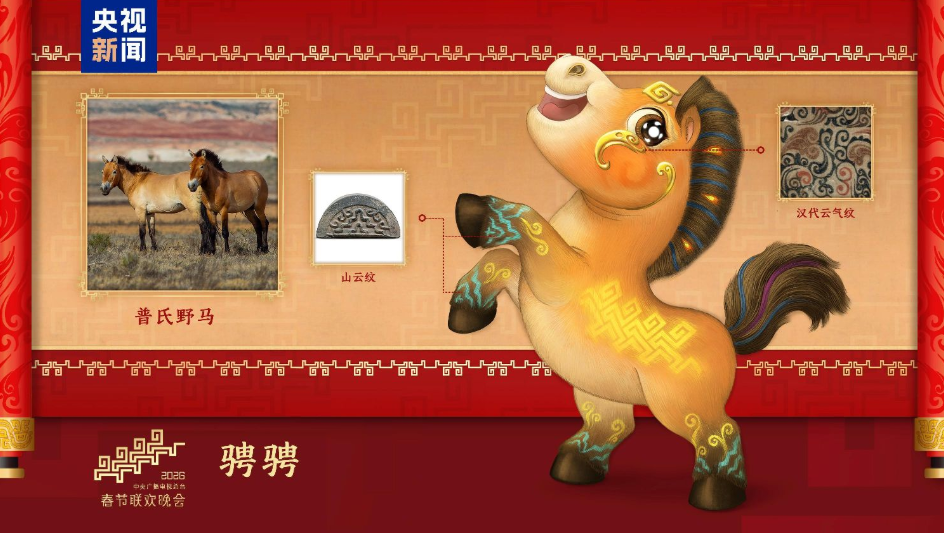
骐骥驰骋!2026年总台马年春晚吉祥物发布
-
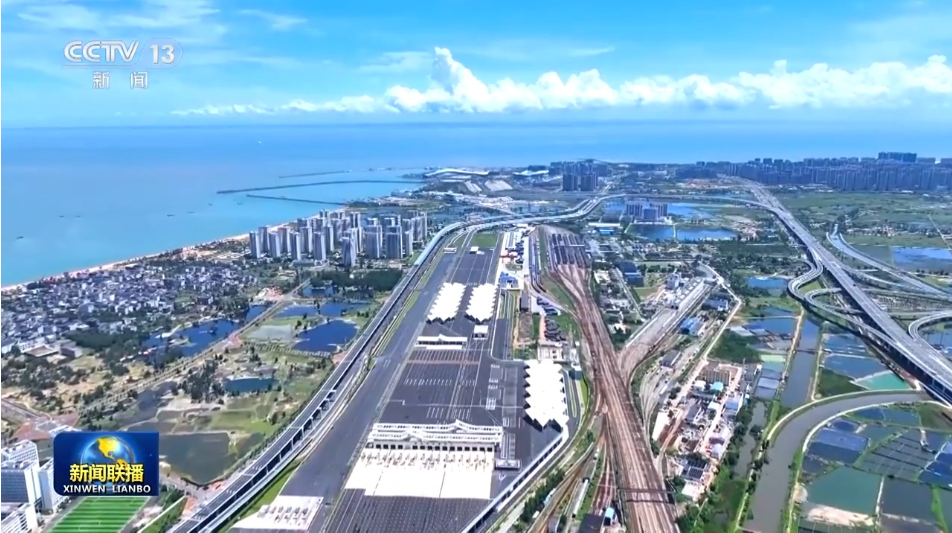
新思想引领新征程丨海南自贸港全岛封关打造引领新时代对外开放重要门户
新思想引领新征程丨海南自贸港全岛封关打造引领新时代对外开放重要门户
最新热点习近平总书记指出:“今年12月18日海南自由贸易港正式启动全岛封关,这是我国坚定不移扩大高水平对外开放、推动建设开放型世界经济的标志性举措。...
 VIP展示
VIP展示

 华侨之声
华侨之声
 海南自贸港启动全岛封关
 山水有根,鄉愁有聲——寫給韶關
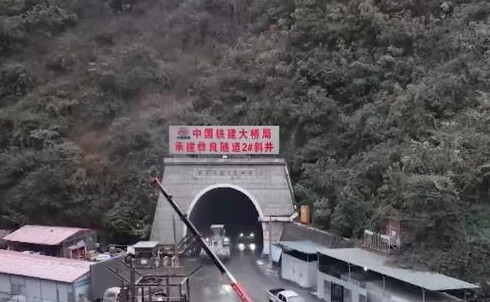 中国时速350公里高铁最长隧道贯通
 中国成功发射卫星互联网低轨14组卫星