

Findings refine knowledge of galaxy
A Chinese astronomer has helped uncover the exuberant "teenage years" of the Milky Way when it merged with a satellite galaxy, consumed plenty of hydrogen gas and formed many stars, according to a study published in the journal Nature on Thursday.
Xiang Maosheng and Hans-Walter Rix, two astronomers working at the Max Planck Institute for Astronomy in Germany, made the discoveries using data from the Large Sky Area Multi-Object Fiber Spectroscopic Telescope in Hebei province and the European Space Agency's Gaia Telescope.
They examined the ages, chemical compositions and orbits of nearly 250,000 stars in our galaxy, and used them like a "stellar clock" to piece together the most precise estimate of the Milky Way's evolution to date.
The findings have refined our understanding of the Milky Way's evolution, suggesting that parts of it were taking shape much earlier than previously thought. They also suggest the Milky Way may have collided and merged with a satellite galaxy called Gaia-Sausage-Enceladus about 11 billion years ago.
From about 13 to 8 billion years ago, the Milky Way was essentially in its adolescent phase, characterized by creating a massive number of stars. Its productivity peaked around 11.2 billion years ago, the study said.
The high formation of stars might be due to the two merging galaxies colliding and mixing huge amounts of interstellar material and gases together, leading to favorable conditions for new stars to be born.
Broadly speaking, our home galaxy's structure is made of two components: the halo and the disk. Traditional theory held that the halo, the spherical region surrounding the disk, is the oldest component of the galaxy.
However, the study found that the thicker region of the disk of stars that make up the core of our galaxy, also known as the "thick disk", began forming around 13 billion years ago, 800 million years after the Big Bang.
This meant parts of our Milky Way galaxy were forming 2 billion years earlier than the assembly of the halo, during the period known as the cosmic Dark Ages about 370,000 to 1 billion years after the Big Bang.
From the subsequent 8 billion years to the present, our galaxy entered its long and relatively "tamed" adulthood as the thick disk had exhausted much of its initial supply of hydrogen gas, the material needed to sustain nuclear fusion at a star's core.
Rix told Nature that their methodology is comparable to studying the evolution of a metropolis by finding out who lived where, when houses were built, and how and when people moved around.
Xiang, who was a postdoctoral fellow at the National Astronomical Observatories of the Chinese Academy of Sciences, said stars are like fossils, which help scientists probe the galaxy's past.
Given how the study only sampled a tiny fraction of the estimated 100 to 400 billion stars in the Milky Way, Xiang said he hopes to examine a much greater number of stars across considerably larger distances in the future to get a more precise chronology of our galaxy.



 最新热点
最新热点
-
以色列炮击加沙城致至少6人死亡

以色列炮击加沙城致至少6人死亡
最新热点中新社北京12月20日电 综合消息:以色列军队当地时间19日晚炮击加沙城东部图法居民区,造成至少6名巴勒斯坦人死亡。 据巴勒斯坦通讯社消息,以军当日对图法居民...
-
广东迎来红叶最佳观赏季
广东迎来红叶最佳观赏季
最新热点每年的11月至次年的1月是广东赏叶的好时节,广东多地如广州、肇庆、韶关、江门、清远、河源、梅州的红叶和彩叶已陆续登场,一年一度最色彩斑斓的赏叶季应时而来,吸引了...
-
展现深圳腾飞“奇迹”!总台首部原创精品短剧集《奇迹》定档12月22日
展现深圳腾飞“奇迹”!总台首部原创精品短剧集《奇迹》定档12月22日
最新热点12月20日,中央广播电视总台携手深圳共创的首部原创精品短剧集《奇迹》宣布定档,将于12月22日至明年1月12日在央视一套晚黄金时段跨年播出。 《...
-
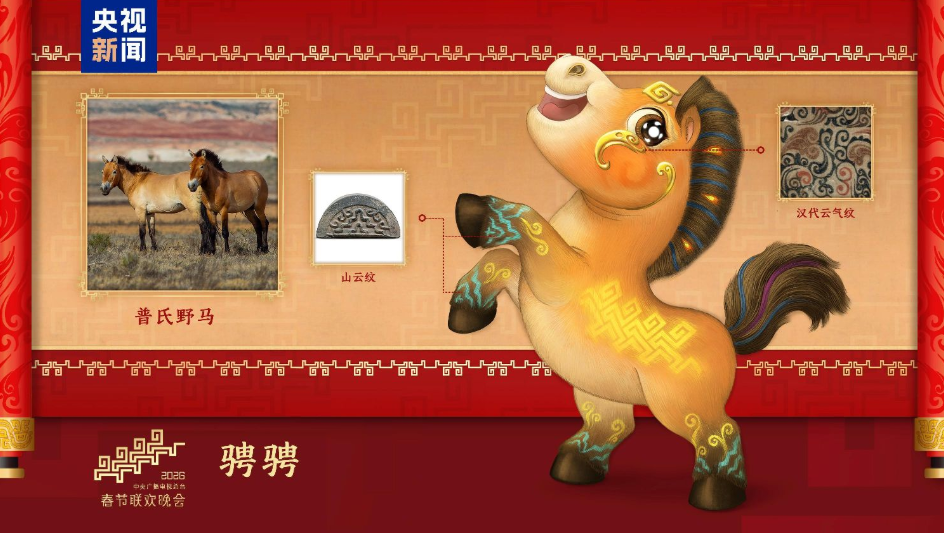
骐骥驰骋!2026年总台马年春晚吉祥物发布
-
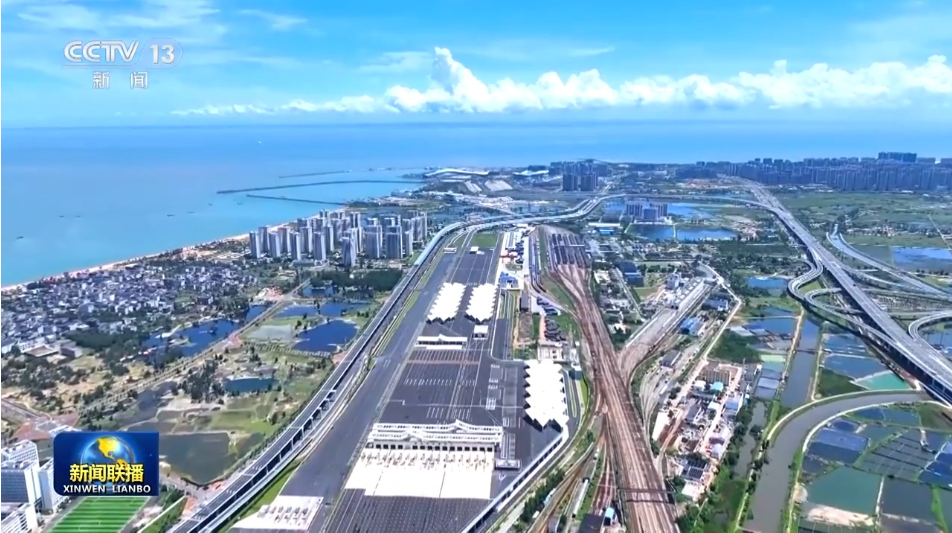
新思想引领新征程丨海南自贸港全岛封关打造引领新时代对外开放重要门户
新思想引领新征程丨海南自贸港全岛封关打造引领新时代对外开放重要门户
最新热点习近平总书记指出:“今年12月18日海南自由贸易港正式启动全岛封关,这是我国坚定不移扩大高水平对外开放、推动建设开放型世界经济的标志性举措。...
 VIP展示
VIP展示
 华侨之声
华侨之声
 海南自贸港启动全岛封关
 山水有根,鄉愁有聲——寫給韶關
 中国时速350公里高铁最长隧道贯通
 中国成功发射卫星互联网低轨14组卫星