

Shenzhen living showcase of China
2026-01-07 22:25:58
|
来源:South
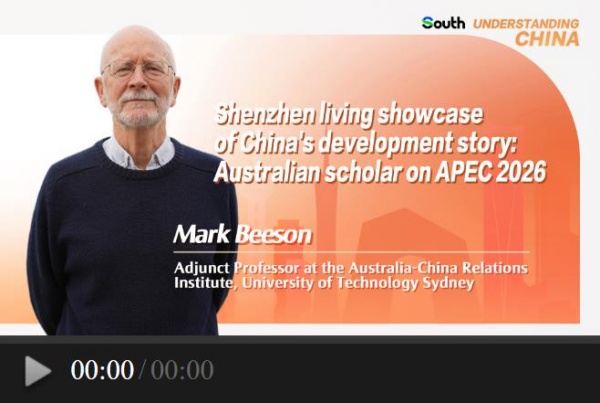
Shenzhen living showcase of China's development story: Australian scholar on APEC 2026
As the Asia-Pacific Economic Cooperation (APEC) enters what is being referred to as the "China Year," with Shenzhen set to host the 2026 APEC Economic Leaders' Meeting, the forum is once again in the spotlight. For Australia, a founding member of APEC, the organization has long served as a vehicle for promoting open markets and regional integration.
Professor Mark Beeson of the University of Technology Sydney reflects in an interview with South that in 1989, then Prime Minister Bob Hawke viewed APEC as a means to encourage East Asian economies—then largely state-led and protected—to adopt more liberal economic policies, reduce tariffs, and embrace free-market principles.
Today, as APEC agendas expand to include climate change and the digital economy, Beeson sees new opportunities for Australia-China collaboration. "China and Australia do have opportunities to cooperate," he notes, pointing to climate action as a promising area. He suggests that Australia could reduce coal mining while China could slow down coal-fired power plant construction—an important step toward shared decarbonization goals.
Over the decades, Australia has significantly benefited from the APEC framework, particularly through strengthened trade ties with China. China has been Australia's largest trading partner for many consecutive years, with bilateral trade exceeding AU$300 billion annually. The China-Australia Free Trade Agreement (ChAFTA), which came into effect in 2015, has been a key driver, boosting two-way trade by 85.6% since its implementation.
Having hosted APEC in Shanghai in 2001 and Beijing in 2014, China is now preparing to welcome members to Shenzhen—a city that exemplifies its economic transformation. Beeson, who visited Shenzhen in 1990 when it was "a small city with shipbuilding in the middle," describes its development as "astounding" and a model of China's unprecedented growth. Hosting APEC 2026 in Shenzhen, he asserts, signals China's ongoing commitment to openness and dynamism, even amidst global uncertainties.
For the wider region, Shenzhen's rise also reflects shifting economic patterns. Some manufacturing has relocated to lower-cost destinations like Vietnam, partly in response to U.S. tariff barriers—a trend that highlights both challenges and opportunities for APEC economies.
Despite APEC's non-binding nature, Beeson believes that China's growing influence, supported by its economic weight and trade partnerships, could help advance collective agendas, including the vision of an "open, dynamic, resilient, and peaceful Asia-Pacific community by 2040." In a climate where some nations are leaning toward protectionism, China's advocacy for free trade within APEC carries particular significance.
As Australia and China mark a decade of ChAFTA, the focus shifts to leveraging APEC not only to deepen trade but also to foster cooperation in emerging fields. Whether APEC can strengthen institutional resilience amid global headwinds remains to be seen, but with engaged members like China and Australia, the forum continues to provide a platform for shaping the region's economic future, as Beeson emphasizes.
Reporter: Guo Zedong
Video: Pan Jiajun
Poster: Lai Meiya
Editor: Yuan Zixiang, James Campion, Shen He, Ou Xiaoming
As the Asia-Pacific Economic Cooperation (APEC) enters what is being referred to as the "China Year," with Shenzhen set to host the 2026 APEC Economic Leaders' Meeting, the forum is once again in the spotlight. For Australia, a founding member of APEC, the organization has long served as a vehicle for promoting open markets and regional integration.
Professor Mark Beeson of the University of Technology Sydney reflects in an interview with South that in 1989, then Prime Minister Bob Hawke viewed APEC as a means to encourage East Asian economies—then largely state-led and protected—to adopt more liberal economic policies, reduce tariffs, and embrace free-market principles.
Today, as APEC agendas expand to include climate change and the digital economy, Beeson sees new opportunities for Australia-China collaboration. "China and Australia do have opportunities to cooperate," he notes, pointing to climate action as a promising area. He suggests that Australia could reduce coal mining while China could slow down coal-fired power plant construction—an important step toward shared decarbonization goals.
Over the decades, Australia has significantly benefited from the APEC framework, particularly through strengthened trade ties with China. China has been Australia's largest trading partner for many consecutive years, with bilateral trade exceeding AU$300 billion annually. The China-Australia Free Trade Agreement (ChAFTA), which came into effect in 2015, has been a key driver, boosting two-way trade by 85.6% since its implementation.
Having hosted APEC in Shanghai in 2001 and Beijing in 2014, China is now preparing to welcome members to Shenzhen—a city that exemplifies its economic transformation. Beeson, who visited Shenzhen in 1990 when it was "a small city with shipbuilding in the middle," describes its development as "astounding" and a model of China's unprecedented growth. Hosting APEC 2026 in Shenzhen, he asserts, signals China's ongoing commitment to openness and dynamism, even amidst global uncertainties.
For the wider region, Shenzhen's rise also reflects shifting economic patterns. Some manufacturing has relocated to lower-cost destinations like Vietnam, partly in response to U.S. tariff barriers—a trend that highlights both challenges and opportunities for APEC economies.
Despite APEC's non-binding nature, Beeson believes that China's growing influence, supported by its economic weight and trade partnerships, could help advance collective agendas, including the vision of an "open, dynamic, resilient, and peaceful Asia-Pacific community by 2040." In a climate where some nations are leaning toward protectionism, China's advocacy for free trade within APEC carries particular significance.
As Australia and China mark a decade of ChAFTA, the focus shifts to leveraging APEC not only to deepen trade but also to foster cooperation in emerging fields. Whether APEC can strengthen institutional resilience amid global headwinds remains to be seen, but with engaged members like China and Australia, the forum continues to provide a platform for shaping the region's economic future, as Beeson emphasizes.
Reporter: Guo Zedong
Video: Pan Jiajun
Poster: Lai Meiya
Editor: Yuan Zixiang, James Campion, Shen He, Ou Xiaoming
郑重声明:本则消息未经严格核实,也不代表本站观点,本站不承担任何法律责任。

 最新热点
最新热点
-
遇见习近平丨跨越山海,续写“鼓岭情缘”

遇见习近平丨跨越山海,续写“鼓岭情缘”
最新热点应美利坚合众国总统特朗普邀请,国家主席习近平将于9月23日至25日对美国进行国事访问。 国之交在于民相亲,民相亲在于心相通。国与国关系发展的根基在...
-
马克龙:支持加拿大和欧盟相互靠拢

-
脚斗运动全球正式启航:更安全、更包容、更具观赏性的全新对抗运动
-
思想耀岭南 | 对话谢有顺:写作的黄金时代就是当下此时

思想耀岭南 | 对话谢有顺:写作的黄金时代就是当下此时
最新热点6月27日起,广东在全网推出《思想耀岭南》系列视频。第一季共20集,20名对话嘉宾将分享他们在工作、生活中的所思所感,以个体视角讲述广东故事、大湾区故事...
-
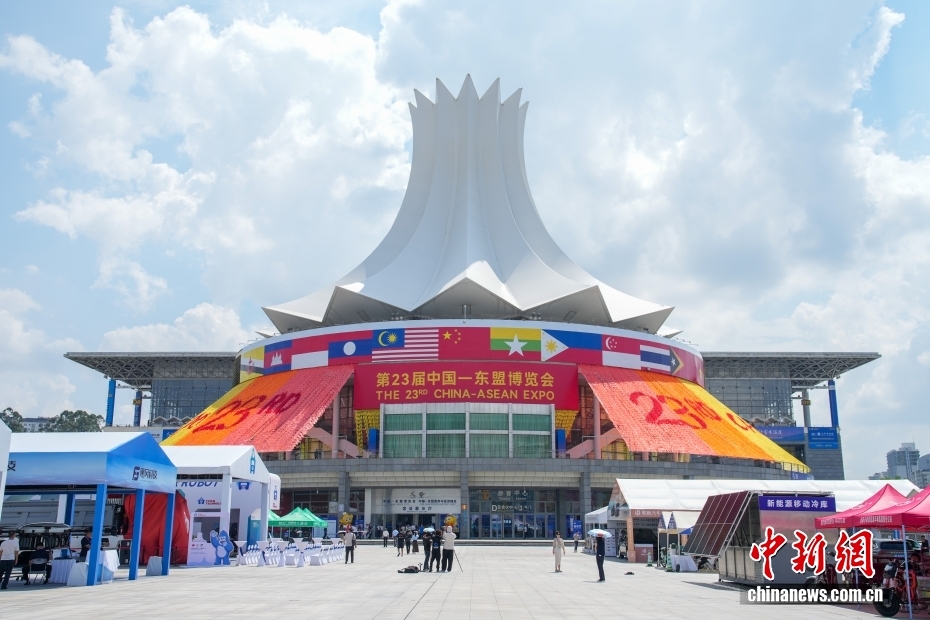
第23届中国—东盟博览会开幕
 VIP展示
VIP展示
 华侨之声
华侨之声
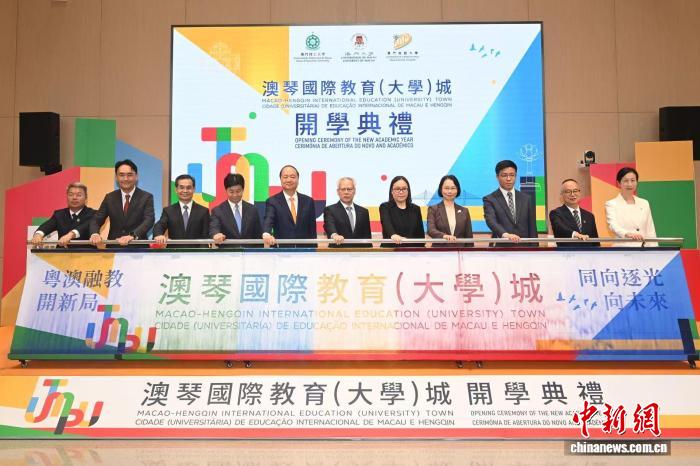 澳琴国际教育(大学)城三高校联合举行开学礼
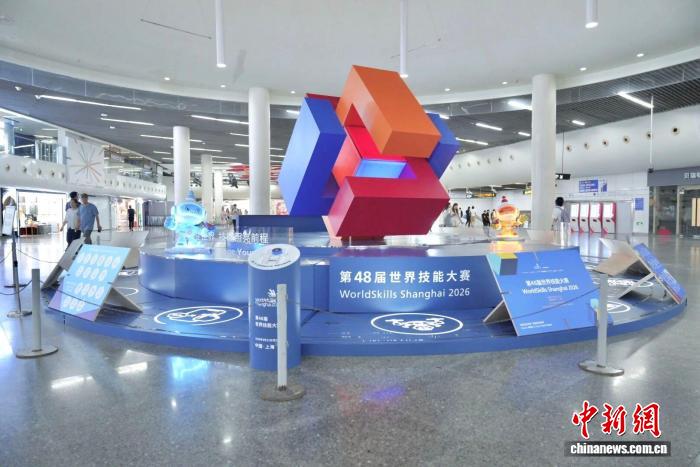 全城迎世赛 上海地铁以流动窗口传递技能之美
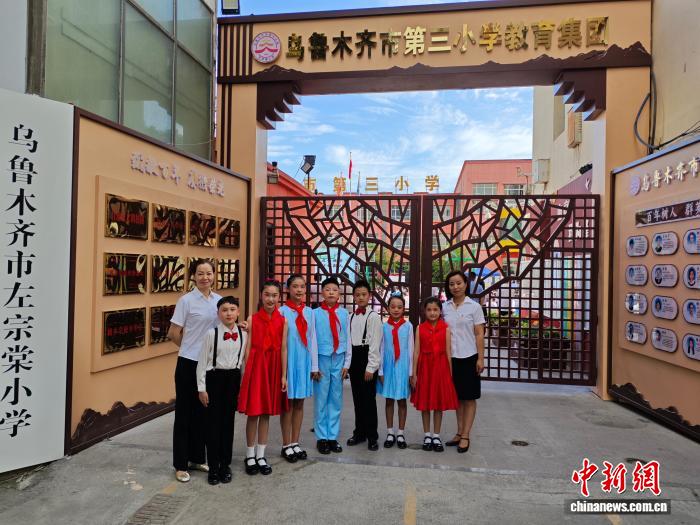 “乌鲁木齐市左宗棠小学”正式揭牌